
Hiring that finds the right person.
We build the platform for testing, assessing and interviewing candidates, so every hiring team can choose the most suitable person for the role, fairly and on evidence.

Why we started
Assessments were quick to send. Choosing between candidates still came down to who interviewed best and whose résumé looked strongest.
- founded
- 2016
- people
- 28
- how we work
- Remote
Next HR began in 2016, when Daniel Hartmann and Luca Bianchi, who had been running remote engineering hiring at a fast-growing scale-up, decided to build the tool they were missing. Assessments were quick to send, but choosing between candidates still came down to who interviewed best and whose résumé looked strongest.
Every interviewer weighed different things, and good candidates slipped through. So we set out to build the platform we wanted: one place to define what a role needs, measure it with tests, assessments and structured interviews, and compare everyone on the same terms. Years later, as AI assistants and face-swap tools appeared, we added verification so the evidence could be trusted. We named it Next HR because that is the goal: a clear view of who is right for the role.
Ten years on, a remote team of 28 people helps companies in tech, finance, outsourcing and education choose the right candidate with confidence, without turning any candidate into a suspect.
We still build with that first problem in mind. The question we ask of every feature is whether it gives the person reading the result more evidence, and whether it treats the candidate fairly while doing so.

Make hiring fairer and clearer.
We think the best person for the job should be the one who gets it, whoever they know and however they interview. That takes real evidence, equal conditions for every candidate, and a trust layer so the evidence can be believed.
It also takes humility. Our software ranks, flags and explains. People decide.
28
people, working remotely
210+
hiring teams
380K
assessments delivered
24
countries
What we stand for
Four principles, and where you can see each one at work.
Evidence over gut feeling
Every score comes with the evidence behind it: the answer, the signal and the time. A ranking you cannot explain is not one you should trust.
In practice: Scorecards and ranked shortlists show their working.
Read our framework for evidence-based hiringRespect for candidates
Candidates take a test at home, often with a lot at stake. They deserve a calm, accessible process, a practice test and a plain explanation of what is recorded.
In practice: Candidates never pay, and can try the app first.
See the candidate help centreHumans decide
Software can rank, flag and explain. It cannot know a person’s circumstances. A person looks at the evidence and makes every decision that matters.
In practice: Next HR never rejects a candidate on its own.
Read why, with the arithmeticPrivacy by default
We collect what an assessment needs, show candidates what that is before it starts and keep it for the period the hiring company sets.
In practice: The heavier checks, camera photos and screen recording, are off until a team switches them on.
Read our approach to monitoringWhat we will not do.
A trust platform is defined as much by what it refuses to do as by what it does. These are lines we hold, and you can check each one against the product.
See our trust and security highlights- We will not: reject a candidate automatically.A person looks at the evidence and decides every outcome.
- We will not: use a candidate’s microphone.It is never switched on.
- We will not: read other programs, or the clipboard outside the test window.Only what happens inside the assessment is noted.
- We will not: watch candidates outside the assessment.Nothing is recorded before it starts or after it ends.
- We will not: score emotion or personality from a face or a voice.The science is weak, and it is the wrong thing to hold against a candidate.
- We will not: charge candidates for anything.They download the app, run the system check and take the test for free.
How we think about hiring
We publish our reasoning. Our library has 104 guides, papers, product docs and definitions, with the sources and the arithmetic.

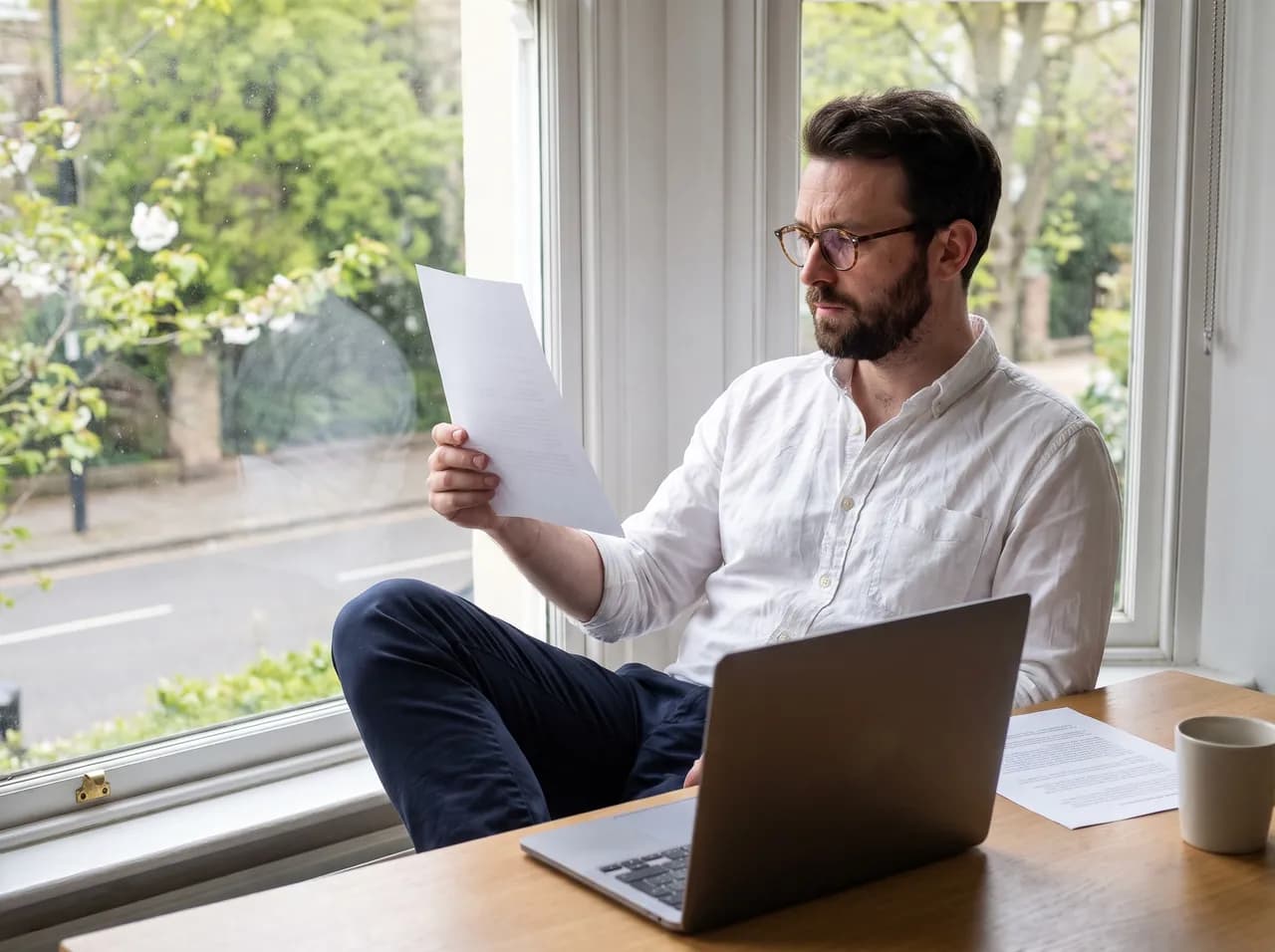

How we got here
- 2016
Daniel and Luca start Next HR from a hiring problem they had run into themselves, and ship the first assessment builder to five design partners.
- 2020
Remote hiring becomes the norm. Structured interviews and scorecards join the builder, and the first outsourcing and finance teams come on board.
- 2025
The secure desktop app, device binding and the first identity checks launch. 70 hiring teams join during the year, across tech, finance and outsourcing.
- 2026
Coding assessments with a real editor, an AI assessment builder, organizations with hiring teams, and integrations with the applicant systems teams already use.
The people behind Next HR
A small team of engineers, researchers and hiring practitioners, working remotely.

Daniel Hartmann
Co-founder and CEO
Ran remote engineering hiring before starting Next HR. Talks to customers every week.

Luca Bianchi
Co-founder and CTO
Builds the assessment engine and the secure app, and keeps the platform simple to run.

Elena Marsh
Head of Research
Studies what makes hiring decisions fair, and how to keep results trustworthy.

Jonas Weber
Product Manager, Identity
Owns identity checks and the recruiter review experience.

Claire Fontaine
Customer Success Lead
Helps teams put structured assessments in place without losing candidates.

Sam Whitaker
Staff Engineer
Builds the coding engine. A better question beats more surveillance.
The people who write our guidance
Specialists in selection, assessment design, privacy and integrity write the library, and the product team writes the docs.
Jonas Brandt
Organisational psychologist
Jonas works on how to choose people on evidence: success profiles, structured interviews and checking whether a hiring method really predicts good work.
26 resources in the library
Emma Hartley
Head of assessment design
Emma designs assessments and interview guides, from question writing and scoring rubrics to take-home tasks and accessibility.
19 resources in the library
Nora Lindqvist
Talent acquisition advisor
Nora helps hiring teams improve the candidate journey, from job descriptions and screening at volume to remote interviews and the final decision.
16 resources in the library
Chiara Marchetti
Privacy and compliance lead
Chiara covers data protection, responsible use of AI and auditing hiring processes.
13 resources in the library
Tobias Keller
Assessment integrity lead
Tobias works on keeping online assessments trustworthy without treating candidates as suspects: AI tools, identity, remote conditions and fair review of flags.
7 resources in the library
Ryan Caldwell
Product lead
Ryan leads the Next HR product and writes the product documentation, along with the reasoning behind design choices such as keeping a person in every hiring decision.
23 resources in the library
Help us build better hiring
We are a remote team. Send a note to careers@nexthr.net with the role you have in mind.
- Senior Backend EngineerPlatform · RemoteGet in touch
- Computer Vision ResearcherIdentity · RemoteGet in touch
- Customer Success ManagerCustomers · RemoteGet in touch
- Product DesignerDesign · RemoteGet in touch
We hire the way we ask you to.
Every candidate for a role gets the same questions, scored against the same criteria, and interviewers write their scores before they compare notes. It is the method in our guide to structured interview questions.
Where to find us
Company
Next HR
Founded 2016. A remote team: the best way to reach us is by email.
Write to us
- Sales and demossales@nexthr.net
- Supportsupport@nexthr.net
- Securitysecurity@nexthr.net
- Privacyprivacy@nexthr.net
Opening hours
Monday to Friday, business hours
For a walkthrough, tell us your hiring volume and the roles you fill, and we will tailor it.
Request a demoLet's talk about your hiring.
Book a short walkthrough and see Next HR rank candidates against your role. We will tailor it to your hiring process.